Lotsa Dogs Lotsa Fun

Lotsa Dogs Lotsa Fun
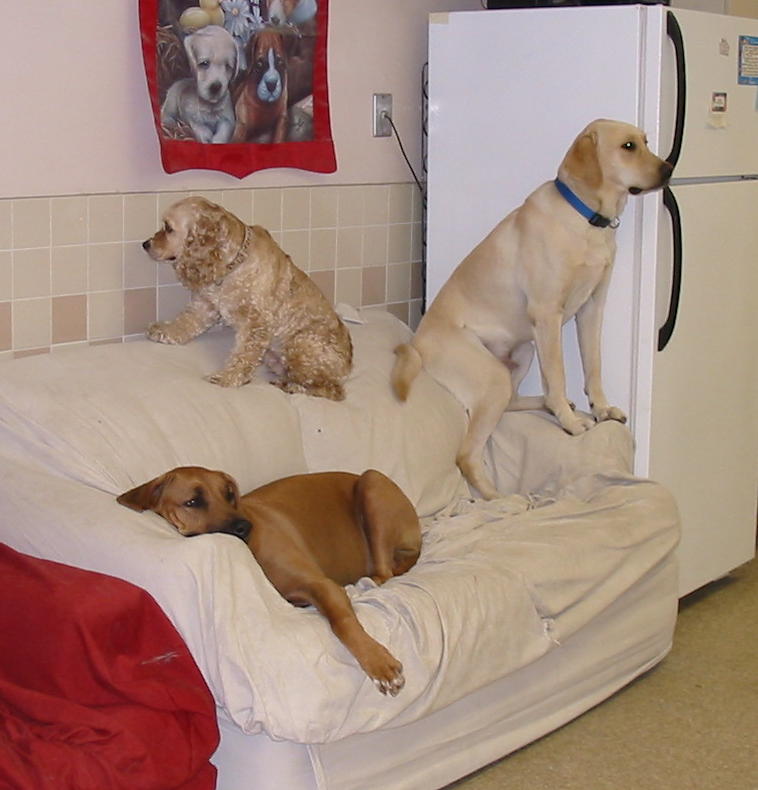
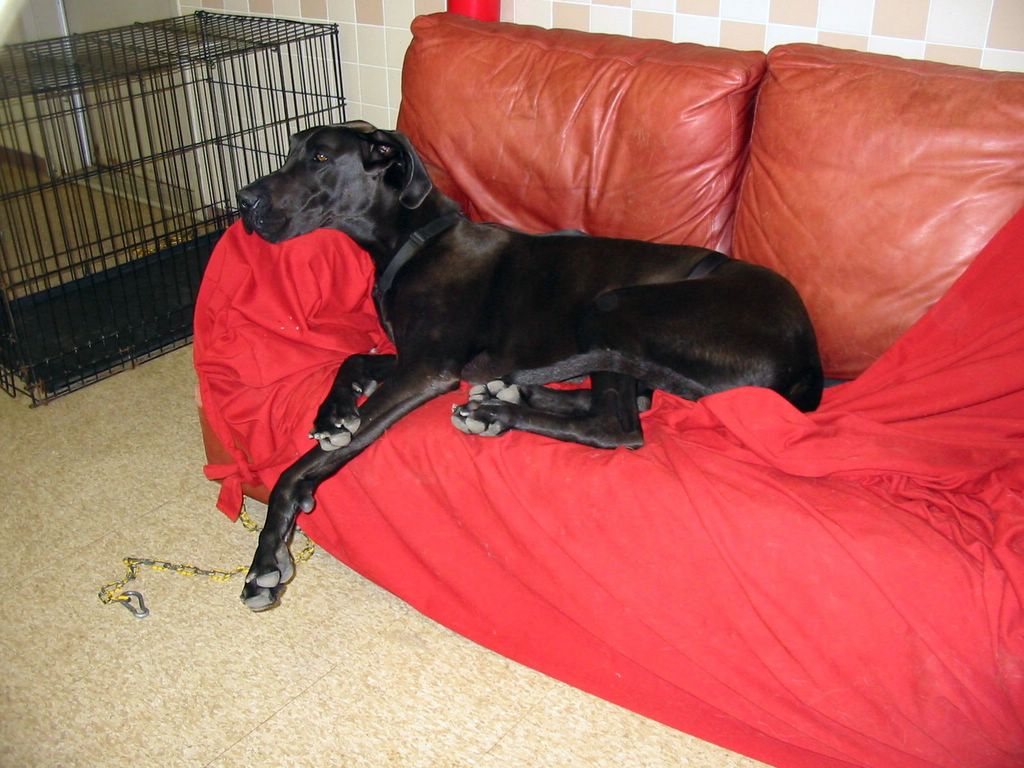
The Big Dogs Wait at The Door

Thursday, July 24, 2008

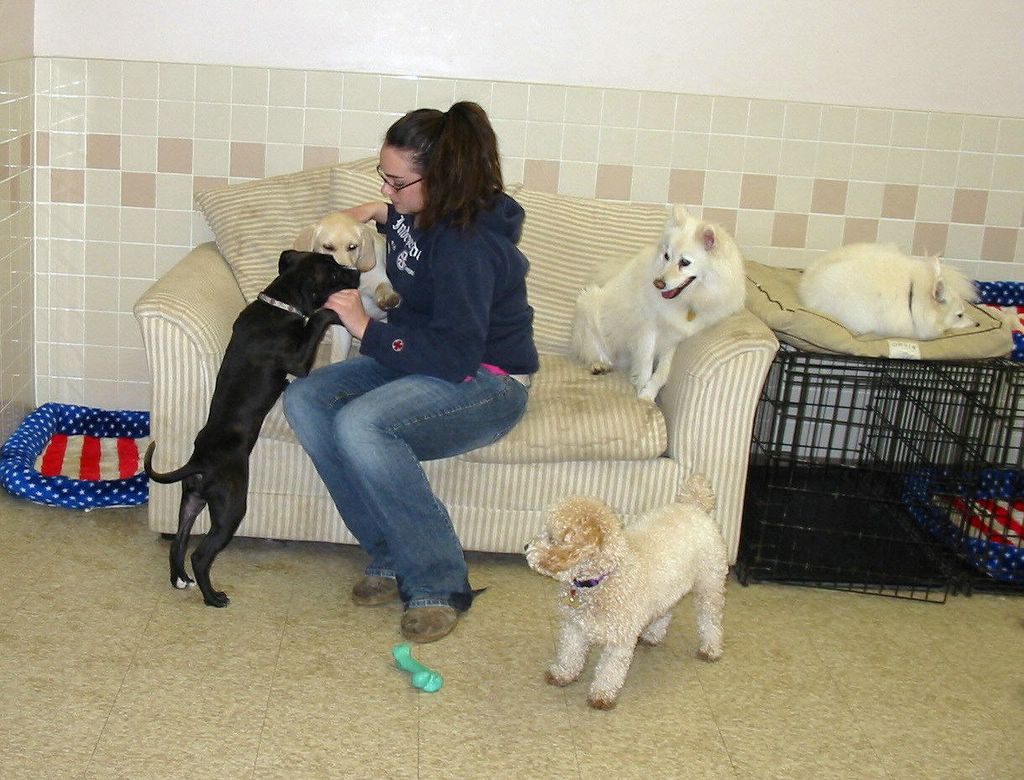
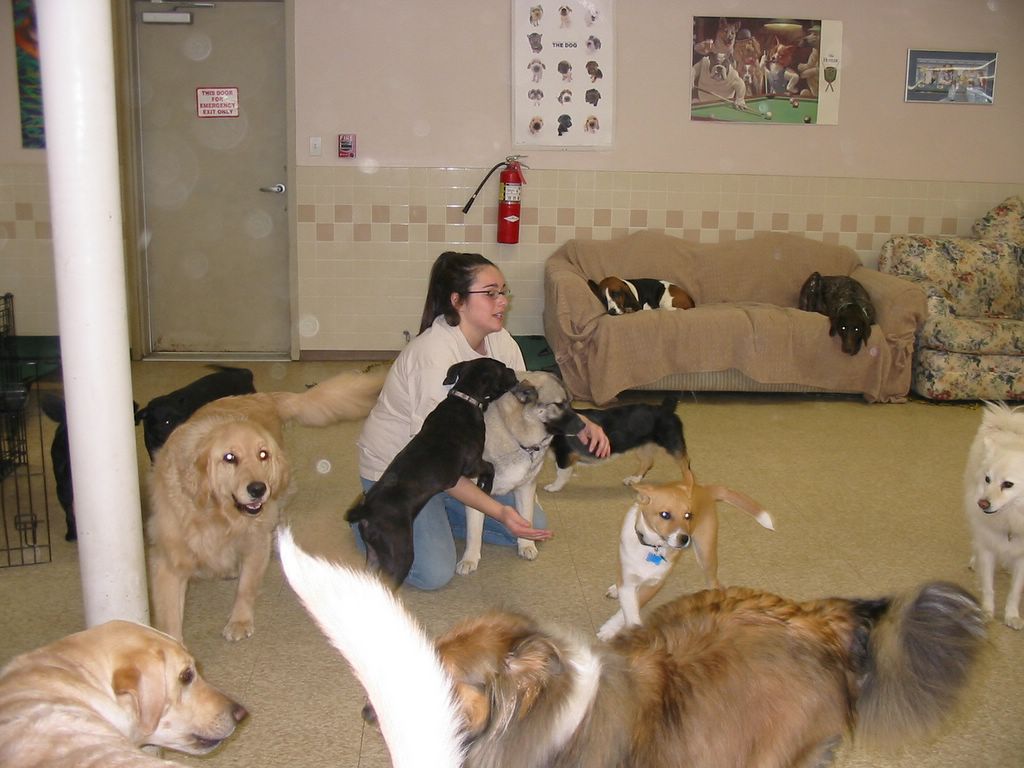
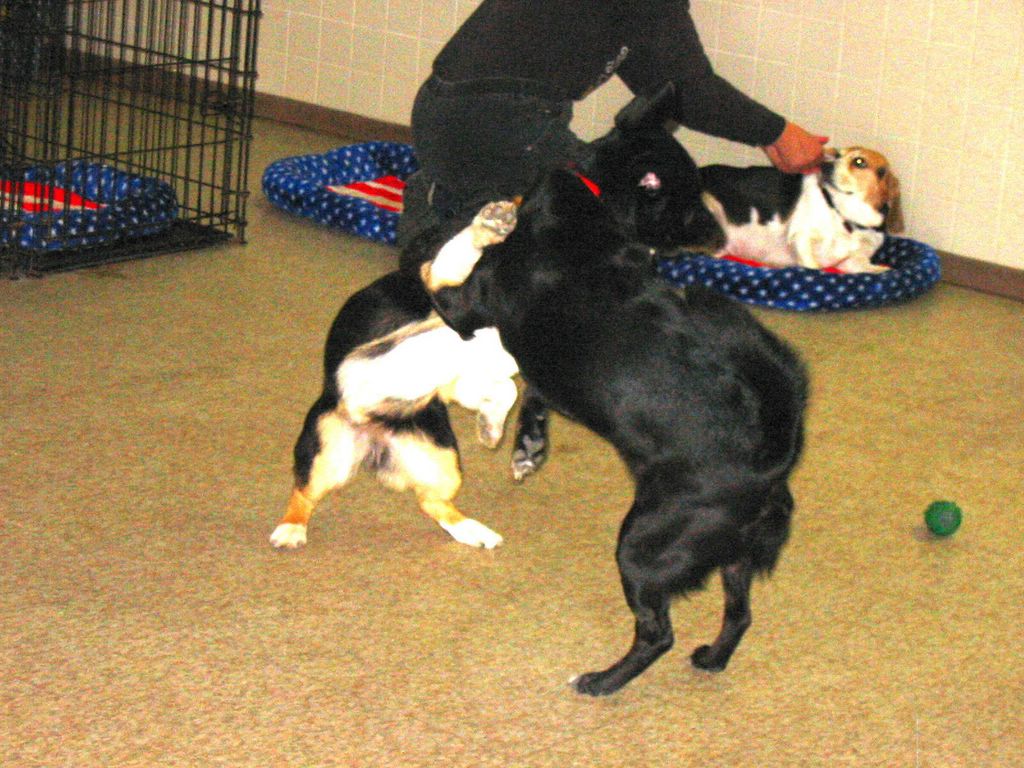
Go slow: Dogs at Play


Wouldn't your dog like to have fun this summer ??


Of course s/he would!!!


Call Susan at 508-393-6970 for a FREE daycare evaluation for your dog.

Wednesday, July 23, 2008

Buyer Beware! Unsafe Daycares

There are lots of veterinarians, groomers and kennel owners who decide to add dog daycare to their service offerings. Some are qualified to manage dogs in packs, but many are not. And many create environments that look cute but could be dangerous to your dog! Experienced daycare providers know that:

1. Every surface in the environment must be securely affixed, washable and disinfectable. None should be porous, loose, or permeable. No plaster (they'll eat it), curtains or hangings (they'll pee and vomit on them and tear them up); or ornate beds (they'll chew and swallow pieces).

2. No matter how well you supervise dogs at play, they're going to get into things they're not supposed to - so make sure there's nothing "verboten" in their environment.

3. The only objects the dogs have access to should be industry-approved toys and equipment. Beds and crates, for example must be washed and disinfected every day!

4. Toys should be examined DAILY to make sure they are not damaged or broken in such a way that a canine guest could get a piece lodged in his or her throat or intestines. For example rope toys made of string are a big no-no.

and last but not least

4. If it's too cute it's probably not a safe environment!


Some daycare play areas, for example, include fabric hangings that can be ripped and eaten; they also hold odors, bacteria and viruses. Rubber or other relatively porous flooring also retains germs and odors and can be dug or chewed up. Many daycare environments are designed to charm people, but are not right for dogs.

At The Doggie Den, all of our play areas are surrounded by sparkling clean ceramic tile walls. The floors are non-slip industrial pvc tiling that cannot be ripped up or chewed. Our toys are those recommended for daycare providers by the American Pet Care Association. Our beds and crates are also industry approved. The couches in the play areas are covered by removable, washable covers and are disinfected frequently.


Come see for yourself ! The Doggie Den is truly the best dog daycare in central Massachusetts.

The Doggie Den Homepage

The Well-Groomed Dog


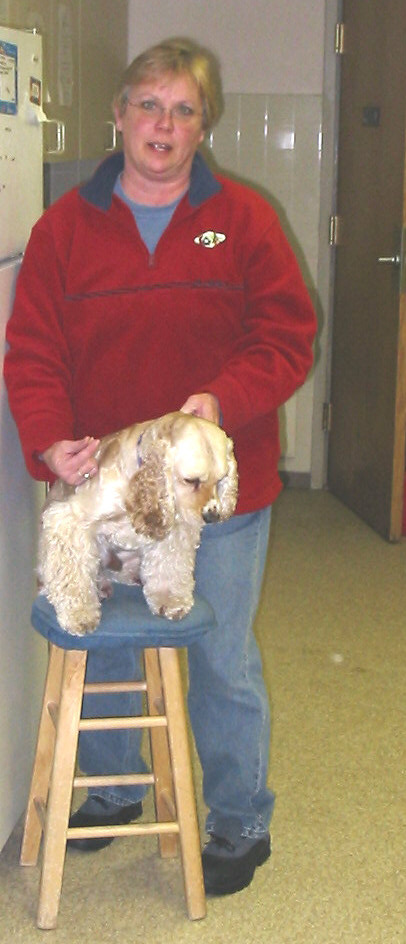
At The Doggie Den Maria grooms your dog the way you like! Tell her what you want and she'll do it! Our prices are all-inclusive: a high end, all natural shampooing, a blow-dry, a haircut to your specs, trimmed or filed nails, and clean ears. For example meet Roxy, a lhasa apso that a customer brought to our salon all matted and messy. She was too embarassed for us to photograph her in that condition! The customer had been ill and unable to brush Roxy, so she needed Maria's help. Maria patiently dematted. bathed, conditioned and brushed Roxy's coat; and here's how she looked when she went home!


And here's a poodle when he arrived:


And here he is, ready to go home! (There's more light in the "before" picture, so it looks like a different dog from the "after", but it's the same guy!) Notice how much more self confidently he stands once he looks like a pro!


So would your pup like a makeover? Of course he would! Give us a call: 508-393-6970.
Check out these dog links!

The Doggie Den Homepage

Tuesday, July 22, 2008

Ouch! Hot Tops!

Today I was at the bank and I saw a young man walking a fidgety black lab puppy from the bank across the blacktop to his car. It was about 90 degrees outside with bright sun beating down on the blacktop all day. I reached down to touch it and it was too hot for me to put my palm down flat. Imagine what it was like for that puppy!! And his owner was disciplining him for resisting.

This is one of my PET PEEVES. I know it's unintended cruelty but it still makes me crazy. July and August are months that can hurt doggie paws. Road and sidewalk surfaces get extremely hot and dogs will often not complain until their pads are actually burned. At The Doggie Den, our parking lot is blacktopped, so we recommend that customers pull right up to the door to avoid a hot trot. You might want to do the same wherever there's blacktop. Paw burns are one of the most unnoticed doggie discomforts of the summer!

Blacktop is the worst culprit, so if you can find a concrete, brick or light colored stone surface to walk your dog, go for it. If you must cross hot blacktop, do it quickly! Or better yet. CARRY YOUR DOG! Never stand with your dog on a hot surface. Of course, the best solution is to walk your pup on grass or dirt where your town or city permits. And it's always a good idea in extreme temps (hot or cold) to check your dog's paws frequently. Know their usual color and look for unusually dark or uneven spots.

If your dog whines, limps, or licks his or her pads after a walk, it's possible he or she has been burned. Ice down all four paws as best you can and call your vet right away!


Check out these dog links!

The Doggie Den Homepage

Saturday, June 07, 2008

Homage to Daphne


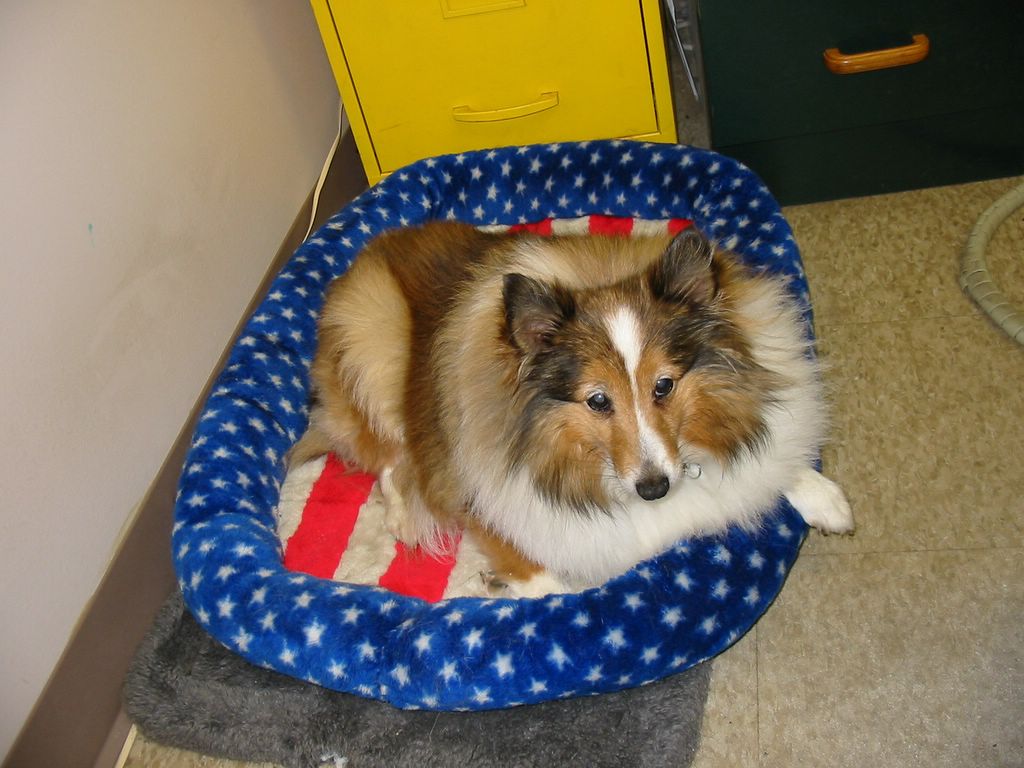
This morning I posted a picture of my new Sheltie puppy without stating the obvious. My beautiful Daphne has died. In fact she died a year ago (May 2007) and I guess I've been in mourning ever since. Haven't felt like posting on this blog since then. I've never had a connection to any living being like the one I had with Daphne. We just knew what each other needed without any adoo. She died with the same quiet dignity with which she lived: one day I picked her up to give her the subcutaneous fluids that she had needed since developing kidney disease, and she just sighed and rested her head on my chest. It took me a couple of beats to realize she was gone. Out of respect for who she was to me, I sat holding her for quite a while, thinking perhaps it would help her process of passing. I have no idea if dog's have souls or if they go on to something else when they die. But I hope that Daphne's spirit stays with us, for she was the most generous, accepting, and forgiving creature I've ever met.


Goodbye, Daphne, love. Thank you for sharing your life with me. You were the sugar in my bowl.

Check out these dog links!

The Doggie Den Homepage

Meet Shannon, The Doggie Den obedience trainer

Hi, I'm Shannon, The Doggie Den's lead obedience trainer, and these are my two spoiled huskeys. I do evening and weekend obedience classes, or I can meet with you in your home if there are problems you want to solve. We have a good time in class while we learn our commands and take some time for the dogs to play with each other. To sign up for one of my classes check out the schedule at www.thedoggieden.net/training. Remember well-trained dogs are much more fun to live with! Hope to see you soon!
Check out these dog links!

The Doggie Den Homepage

Susan's new puppy "Shuki" at 4 months


Meet Shuki, The Doggie Den's newest puppy. Susan bought her in March; she's the first puppy Susan's ever gotten from a breeder, hence her name: Shuki means "marketplace" in Hebrew. Shuki adapted to the playgroups at The Doggie Den without missing a beat. She loves to run around inviting others to chase her. If that doesn't work, she jumps on someone's back and bites their ears. Luckily she's gentle or she'd be in trouble! She's smart, funny and a ball to live with. Go Shelties!
Check out these dog links!

The Doggie Den Homepage

Wednesday, April 25, 2007


My name is Chloe and I'm the cutest Yorkshire Terrier who ever lived. I come to The Doggie Den to gain some perspective... on how lucky I am. I mean these dogs are not attractive. Not like me. I guess it was just fate.

It's Flea Season Again!!

Whether or not you actually see fleas on your dog, they may be there. Scratching, scabs and dark specs, or "flea dirt" on her skin can all be signs that she has become the unwitting host for a family of fleas. During their 6 to 12 month life span a pair of fleas can produce millions of offspring. Hardy offspring, at that: fleas have survived millions of years in a variety of environments, so wherever you live, check your dog!

Fleas can carry tapeworms too. If you notice small white rice-like things in your pet's feces or in the hair around her anus, she probably has tapeworms, which means she may also have fleas. In advanced cases, she may be lethargic and her lips and gums may turn pale. Take her to a vet immediately if she has any of these symptoms.

Battling flea infestation requires PATIENCE and PERSEVERANCE, so put on your armor and get to it! Because the presence of fleas indicates that your pup's coat also hides flea eggs, it will take at least three to four weeks to completely rid her and her environment of this pesky parasite. Different flea products work in different ways, having varying levels of effectiveness; and they kill different flea stages (eggs, larvae and/or adults). You'll need to use a product that has been proven to kill in all the stages, or use a combination of products at the same time to be effective.

Shampoos, powders, and sprays will usually kill the adult fleas on your pup. Using a flea comb regularly will help too. But more adults may be lurking in your home or yard, and eggs or larvae may be laying in wait as well. You'll need to rid your house of fleas by vacuuming and washing pup's bedding once a week, and using a disinfectant on washable surfaces; and an insecticide or insect growth regulator in cracks and crevices. Sometimes foggers are recommended every two to four weeks.

When using chemical products be very careful. You may be providing too much of a potentially toxic chemical if you use, say, a flea shampoo and a fogger that contain the same active ingredient. Always check with your veterinarian before beginning your war on fleas. To assist you with clearing your home of these parasites, you may want to hire a professional exterminator. Your vet may know someone who's experienced with flea infestations.

In recent years, flea control has made great advances. Today there are liquid products which you apply to pup's skin on the back of her neck (so she can't lick the chemical). These products, such as Frontline, K9Advantix, Programme and Advantage, let you treat your pet once a month. The medication enters the bloodstream through the skin and makes flea (and tick) bites toxic without harming your pet. Some of them also create an odor which is undetectable to us but repels fleas and ticks so they don't get into pup's coat in the first place. Be very careful to use these products as directed; some may be effective for dogs, but toxic to cats. Also, you need to wash your hands thoroughly after applying the medication, and make sure children don't touch the affected on your pet area until it dries.

The Doggie Den Homepage

Monday, April 16, 2007

Poisoned dog foods

There's been a ton of reaction to the pet food contamination that has been sickening and killing our furry friends, so I've resisted adding my two cents 'til now. But after the initial hullabaloo, the blogging, emailing, and press coverage have quieted down, and that's too bad. Because pets are getting ill and dying at the same or a greater rate than earlier in the crisis. Reporting is spotty, so it's hard to know just how many animals have been affected. But the early reporting was just the tip of the iceberg! Huge quantities of harmful substances have found their way into pet food ingredients. And 90% of the big commercial brands use the same suppliers!! That means that almost ALL of them bought from the Chinese supplier of wheat gluten whose inventory contained melamine.

We did a series of posts of what's in pet food and how to buy good pet food a year or so ago (please see our archives). That's because pet nutrition is something I get very excited about. Dogs are carnivores, and to a great extent, they can be omnivores. They basically need meat and fish, and can use grains and vegetables. So the ingredient list on a pet food package should start with meat or fish, NOT with grain or "water sufficient for processing"! The first ingredients on the list comprise 95% or so of the food. So there has to be high quality protein, at least for young dogs (older dogs can be healthy eating more grains and vegetables), right at the top of the list. Bone meal is acceptable protein if it's good quality product, meaning processed under sanitary conditions and relatively fresh. Discount dog foods buy up pallets of old bone meal that some distributor will move at a low price, so even if it appears on a supermarket brand label, don't buy the food. And don't buy a food whose first ingredient is a starch, like corn or corn meal. It's okay if corn appears as the 5th or 6th ingredient, but not before.

Besides the content, you need to know that the quality of the ingredients is acceptable. As I documented in my earlier series of posts, all of the supermarket brands are made in huge batches with the cheapest possible ingredients - for big conglomerates it's about a business model, not about pet nutrition. For heavens sakes, Walmart is quite outspoken about that. They tell us in their advertising that they're all about PRICE. They squeeze their suppliers to sell more and more cheaply to Walmart. Why in the world would you feed you best furry friend something you bought in Walmart??? The grains and vegetables in big chain supermarket brands are older and of poorer quality to start with than those in small batch foods. The fats and oils are more often than not rancid by-products of the food industry (like used fryer oil that sits around for months before being processed into pet food).

Remember, pet food ingredients are not protected the way human foods are. And gov't scrutiny of our food chain is woefully inadequate! Please, protect your pet. Notice that NO HEALTHY, SMALL BATCH PET FOOD HAS HAD PROBLEMS WITH CONTAMINANTS! Not a single one! So here are some good foods. Go to your local pet store and ask for: Canidae, Merrick, Chicken Soup for the Dog Lover's Soul, O&M, Bill Jack, Prairie, Red Barn, Pet Naturals of Vermont, Fromm, Diamond Naturals, Precise, or Premium Edge. There are others. Just make sure of two things:

1. The food must be made in small batches (manufactured and packaged by the company on the label and not subcontracted to a big pet food processor). The only preservatives that appear on the package should be natural ones like vitamin E (tocopherals). Chemical preservatives are only necessary if the food spends many months getting from the mixing process to your pet's dish. And they can cause nervous system stress and allergic reactions of which you may not even be aware.

2. The food must contain only human grade ingredients. Lesser ingredients contain bacteria and virii that are not acceptable... and they're not all neutralized by the potent preservatives that big companies use.

The Doggie Den Homepage

Seasonal allergies

In spite of the cold, drizzly weather that has afflicted us in the Northeast, allergy season is settling in, so get ready for the sneezing, itching, and scratching. Not just you, your dog too! Dogs commonly experience seasonal allergies, usually through dermatitis. Instead of sneezing and getting itchy, watery eyes, most dogs have allergic reactions on their skin.

Symptoms of allergic dermatitis include excessive scratching, licking and chewing of paws. Some dogs do get watery eyes too. Excessive scratching can be harmful, in that areas of raw skin are vulnerable to infection and parasites. Dermatitis can be relieved by using a moisturizing shampoo that's made for allergic dogs; allergy itch relief sprays and creams can also be helpful. If the raw spots don't heal quickly be sure to consult your veterinarian.

In addition to common allergens like pollen, fleas are one of the leading causes of dermatitis in dogs. Make sure that your pup is up to date on his/her flea and tick protection. Collars are not much help - use a liquid medication that you apply once monthly to the dog's skin on the back of his/her neck. Frontline Plus, Advantage, and Program are good ones. Read the package to make sure the medication kills fleas, ticks, AND THEIR EGGS. If the latter are not killed they can drop off into your carpets or furniture causing an infestation in your home.

It's also a good idea to make sure your pet is getting proper nutrition to keep his/her coat and skin and immune system healthy enough to resist irritants. The use of vitamins and supplements can help maintain a healthy coat, but the first step is to feed a high quality food that's produced with human grade ingredients and manufactured in small batches. That means no supermarket foods!!! Companies like Iams and Eukanuba have been bought up by huge conglomerates and are no longer premium foods. Go to a health-oriented pet store (not a large chain like PetCo) and get a food that specifies human grade ingredients and lists Omega 3 and 6 among the first 8 ingredients. If you want a healthy pet you need to read labels carefully, just as you should for your human family!

The Doggie Den Homepage

Friday, March 23, 2007

Housetraining your puppy

One of the most common complaints we get from customers who're inquiring about training is that puppy persists in doing his business in the house. There are lots of different ways to dissuade him from this smelly habit, but the quickest way is to use positive reinforcement. Dogs have an easier time understanding what we DO want than they do sorting out our angry outbursts.

For example, if your puppy pees or poops indoors it does no good to yell at him, hit him, or rub his nose in it. All that tells him is that his human goes nuts when he relieves himself. You want him to think, "Gee, I have to go, better tell my human". And you're teaching him to think, "Gee I have to go, better get as far away from my human as possible 'cause she has a weird aggression problem".

The alternative? Watch your puppy closely and when he starts to squat, interrupt his action with a single loud noise that makes him pause, rush him outside and praise him lavishly when he finishes his business. A treat doesn't hurt, either.

If you miss him going into squat, don't cry over spilled..... um, pee. Don't say anything to him, just clean it up, and ignore any attempt to play with you while you're down there on the floor cursing silently.

And oh, BTW, the reverse is true. Rewarding a puppy for doing something undesirable is as foolish as punishing him for doing something in all innocence. Also, if he poops indoors and looks at you "guiltily", that's not guilt, it's fear. He's expecting you to yell or hit or whatever. Again, just IGNORE MISTAKES, and watch more carefully next time. Better yet, take him out at logical times, like after eating or drinking.

The Doggie Den Homepage

Friday, March 16, 2007

How to make your dog walk nicely

We're expecting a nor'easter in Massachusetts today, March 16th! It's supposed to dump around 6 inches of snow, maybe more. NEVERTHELESS... it's spring, tomorrow is Saint Patrick's Day, and the weather is bound to turn mild one of these days.

Mild weather makes us want to be outdoors - people and dogs! We all know that walking is great exercise and you would think that leash walking the pup would be a preferred springtime activity. Too often, though, we won't walk with our dogs because their on-leash behavior is awful. They pull and jerk us around. So some of us get retractable leashes thinking the dog will get some exercise and it will be less unpleasant for us. WRONG ANSWER. Retractables give your dog license to be out of control which is the problem with her on-leash behavior in the first place. And whose job is it to get pup under control? You guessed it! Someone once said, "When I see a dog behaving badly I look at the other end of the leash".

A tip: dogs need strenuous exercise, especially young ones. Pup will make a better walking partner if, while you're training her, you engage her in strenous activity before snapping on the leash. Try a few rounds of fetch in the yard - tennis ball, frisbee, whatever she'll chase. When she's panting and starting to slow down, snap on the leash and off you go.

All dogs need time to sniff and mark trees along the walking route, so allow them to do so. However, YOU are the one who should decide when that's okay and when it's not. I live on a pretty street where people love to walk their dogs and I'm always seeing owners who take their cues from the dog. Of course, this teaches the dog that she can do what she wants, because you will follow her lead. Don't allow that behavior!

It will take time and patience but you can teach her to look for cues from you as to what's next. Pat Miller, in her column "Good Dog Walking" in the March 2007 issue of The Whole Dog Journal, recommends using a clicker and treats to reward pup when she is walking nicely beside you on a loose leash. Begin by using the command, "Let's walk". This means that pup can do a little sniffing, peeing and exploring as long as she is not pulling on the leash.

Holding the clicker in your left hand and the treats in your right, move forward. When pup is beside you, click and treat. Bring your right hand around to her mouth. You don't want her to move around in front of you to get the treat. Click frequently in the beginning for being close enough that the leash hangs loosely between the two of you. Before long, she will realize that the treat comes when she is close by your left side. When she pulls out ahead of you, stop. Be a tree. Refuse to budge until she turns around to look back at you. As she does so, the leash will slacken. Click and treat.

If that doesn't work, back up slowly, increasing the pressure on the leash. As soon as she moves toward you, click and treat. When she has learned to stay close enough so that the leash is always slack you can begin to teach the "heel" command, which is a precise position next to your left leg used in close quarters of while walking among a group of people and dogs.

Don't give up! It's not safe for your dog or for you for her to ever get the idea that she's the one making decisions. You have to be the "alpha dog". Making the effort to be the leader is just part of having a pet dog.

The Doggie Den Homepage

This is Mitzie, the grande dame of The Doggie Den. She's elderly and quite bossy. We try to respect her wishes but sometimes we get it wrong and does she ever let us know!! We love her dearly - she comes to daycare almost every day.
Mitzie is our March Dog of the Month.
The Doggie Den Homepage

Thursday, February 15, 2007


Saba is The Doggie Den's only Norwegian Elkhound client. She's been coming to play with us since she was a pup and (rightly?) believes she owns the place. She's big, cuddly, easy to please, and, well, opinionated on certain matters. She has a gorgeous coat and a noble head to go with her personality.

Dominance

There are few concepts that dog owners talk about more than "dominance". Every behavior in the book gets attributed to this trait: nipping, leash pulling, humping, body checks during play, and on and on. The minute a behavior disturbs or frightens someone, the dominance devil rears his ugly head.

Let's start with the assumption that we all want what we want, including dogs. So if Fluffy sees that Fido has a cute squeaky toy that he's loathe to share , she's going to challenge him, bark at him, flirt with him, distract him and/or simply grab the toy. If she opts for the more aggressive tactics (like challenging with a stiff body, a hard glare and a growl; or grabbing the toy) she will likely be labeled dominant (argh...). People seem to labor under the misconception that some dogs are hardwired to try to take charge in every situation. I swear, some of our clients think their dogs lie awake at night reviewing their game plan for daily dominance.

It's an easy answer and it helps people to sound knowledgeable. Unfortunately, more often than not, it's the wrong answer. If every undesirable behavior could be reduced to dominance, training your pup not to indulge in same would involve simply overpowering her in each naughty instance. In case anyone is wondering, that doesn't work. The dog may learn to submit (maybe) but only when you're in her face. And she won't learn to obey. Try using power tactics when your dog sees a squirrel and takes off! You'll be lucky if she even notices you.

Most of your pup's behavior is driven by either instinct or conditioning.

Instinct includes fear responses of fight and flight; hunting, (which frequently manifests itself as nipping at or mouthing other animals, including your cat); playing; seeking company (either people or other dogs); and guarding resources, like food. There is a hunting instinct called "predatory drift" whereby a perfectly nice dog will automatically attack (and often try to kill) a smaller animal, especially if the smaller guy moves suddenly, or scoots. These behaviors aren't driven by a desire for status. They're traits carried on from ancestors, or traits that humans have selectively bred for in order to enable the dog to perform a given task successfully. Some breeds of hunting dogs are bred to disable prey quickly and efficiently. Some herding breeds are genetically programmed to nip at other animals on the run to get them going in a certain direction. But very little of your dog's behavior is driven by her need to fancy herself the leader of the pack. Dogs don't have the capacity for that sort of self congratulation. However, they may indeed try to rule the roost if you let them do whatever they want and/or give in to tantrums on their part. I have clients who think it's cute that their dog whines and barks when anyone takes "his spot" on the couch. Not cute. One day a child may visit you and take that seat; his mom will not be delighted when your mastiff barks menacingly.

Behaviors that come from conditioning are those that have gotten your dog what she wants. For example, she may have learned that shoving her muzzle into your hand will get you to stroke her. Sometimes we mean to condition our pups (like when you give a treat if a dog obeys a command) and sometimes we don't even know we're doing it. For instance, if your pup pulls on his leash and you continue to allow him to move forward (what he wants) he's going to pull you every time you snap on his leash. If, on the other hand, he is pulled back by your side and made to stand or sit for a moment every time he pulls, he will learn to do what you want, which is to move forward at a pace that leaves some slack in the leash. That is, IF you're consistent about praising him lavishly (and or treating) every time he moves forward at the pace that YOU set. BTW, with high energy dogs and puppies, it's a good idea to trot or run with your leashed dog at your side at first, so he doesn't have to contain too much frustration!

That said, there is such a thing as social hierarchy, whether we're talking about dog packs, families and their pets, or large corporations. The reason is obvious: social hierarchy is a structure that helps get the group focused on the task at hand, whether it's people making widgets or dogs sharing food without killing one another. In the social hierarchy of dogs, it's not the lead dog or "alpha" that's likely to exhibit aggression. On the contrary, it's the middle ranking dogs that challenge, contest and try to punish. Dogs will follow a leader that doesn't have to exhibit aggression because she is confident in her strength and can get others to obey with a look. Think of those nature films about wild dogs where the alpha will change an underling's behavior simply by staring at him. It is extremely rare that alpha dogs in the wild use force to asset their authority.

So, if your dog growls at any other dog that comes near you, it's likely because she's a feisty middle ranker. If you have a truly dominant dog, he'll be able to get other dogs to back away from you simply by staring. His look will say, "Did you just approach my person without asking?" And, the middle ranker will usually respond by either going away, or asking to approach in a submissive manner, like crouching down and inching slowly toward your alpha dog, always staying lower than him.

Now the REAL question is not whether your dog is dominant or not. It's WHO INFLUENCES WHOSE BEHAVIOR?!! Do you throw your dog's toy because he's barking at you? Yup, he's got you trained. No complaints when he won't do what you want!!

The Doggie Den Homepage

Saturday, December 23, 2006

No sweets for the sweeties!

Holiday time is yucky poop time at The Doggie Den. Not fun! This time of year customers - and especially their kids - insist on giving dogs holiday "treats" that pups cannot digest. It's no treat for the dogs a few hours later, and even less for us when they come to daycare! Not something you get used too, cleaning up that kind of mess several times a day. So I gripe. It helps.

For us the rich holiday goodies may result in a few extra pounds. The cookies, cake, candy, Christmas breads, etc... oooo la la! This time of the year I'm afraid of my bathroom scale! But the consequences for our canine companions are much greater, especially if they ingest too much chocolate. In any form, ranging from one-ounce baking squares to hand-dipped truffles to intense home-made cakes or brownies, chocolate contains theobromine and caffeine, both methylxanthines than can cause stimulation of the central nervous system, an increase in heart rate and tremors. Clinical signs - vomiting, diarrhea, seizures, hyperactivity, and increased thirst, urination and heart rate - can be seen with the ingestion of as little as 2 ounces of baking chocolate by a 10 lb dog.

Thinking sugar-free is okay? It may be a healthier choice for us (and I'm not even sure about that!) but gum or candies made with xylitol can make dogs ill. If they ingest significant amounts, they may develop a sudden drop in blood sugar, resulting in depression, loss of coordination and seizures. Also, data from the ASPCA Poison Control Center appears to point to a link between xylitol and liver failure in dogs.

So take care to keep sweets out of your pup's reach - and don't let them in the kitchen unsupervised if you're baking or have left goodies on counters. If you suspect your pup may have eaten chocolate, candies containing xylitol, or any other potentially poisonous substance, CALL YOUR VETERINARIAN OR THE ANIMAL POISON CONTROL CENTER HOTLINE FOR 24 HOUR TELEPHONE ASSISTANCE: 888-426-4435.

The Doggie Den Homepage

Friday, December 01, 2006

Holiday Pet Safety

Goodness, gracious me, but time does fly. It's been weeks long since I blogged! Good to be back, because with the holiday season in full swing, I just have to talk about pet safety.

Courtesy of the Humane Society, here are some important tips:

'Til the season to decorate our homes with live Christmas trees and other holiday greenery. But did you know that some of these yuletide traditions can be hazardous to your pet's health?

* Lovely lilies are commonly used in holiday floral arrangements, but many varieties - inluding Tiger, Asian, Japaneses Show, Stargazer and the Casa Blanca - can cause kidney failure in cats if ingested.

* Bag the boughs of holly and mistletoe. Sure, they add a nice touch to your holiday decor, but holly can cause nausea, vomiting, diarrhea and lethargy if eaten by your pet. And should he or she sample mistletoe, he/she could suffer gastrointestinal upset and cardiovascular problems. Opt for just-as-jolly artificial plants made from silk or plastic.

* Christmas tree water may contain fertilizers that can cause stomach upset. Stagnant tree water is a breeding ground for bacteria, and your pet could end up with nausea or diarrhea should he or she imbibe.

* Although the potential toxicity of poinsettias is generally overstated, these showy holiday plans can irritate your pet's mouth, and may cause nausea and/or vomiting.

If you suspect that your animal companion has eaten a potentially toxic substance, call your veterinarian or the ASPCA Animal Poison Control Center at 888-426-4435 for round-the-clock telephone assistance.


Check out these dog links!

The Doggie Den Homepage

Monday, September 25, 2006

Household toxins that kill

I don't know how we raised pets when we were kids, because no one ever told us all the stuff that I currently know, yet my family had a healthy cat and a healthy dog, both of which 'made old bones'. But the ASPCA says that incidents of pets ingesting household and backyard poisons is increasing. Perhaps there are more products around that are made with poisonous ingredients; or maybe busy families forget to supervise dogs and/or leave cabinets open. At any rate I read the amazing statistic that incidences of poisoning with polyurethane glue have risen 740% since 2002 (see Petsitusa link)!!

Autumn brings particular dangers like lawn treatments and antifreeze. Fertilizers continue to be a danger in the fall for those who plant bulbs. Cleaning products are always a hazard. Many plants are toxic to dogs and cats, so as you bring plants inside for the winter, check with the Poison Control Center (phone number below). All toxic products should be keep in sealed plastic containers, like the ones you can buy at Walmart for not much money. Drop your bag of bulb fertilizer in a plastic container and make sure the top is firmly set. Same with plastic bottles containing fluids like cleaners and antifreeze. If you winterize your car yourself, make sure to clean up any spills promptly and keep the dog out of your work area! A tip I recently learned: antifreeze containing propylene glycol is less toxic than antifreeze made with ethylene glycol. But both will make your pup or kitty ill!

Salts and chemicals used to melt ice are a definite cold weather problem for pets. Walking on ice melts that contain calcium chloride and/or table salt can cause skin irritation. Chemicals used in ice melts can cause pets who lick their paws to experience vomiting, decreased muscle function and in severe cases, seizures, coma and death. Better to use benign substances like the product "SafePaw", or even ashes or sand in area where you pet walks.

If you think your pet has ingested a dangerous substance, contact your vet on an emergency basis or immediately call the ASPCA Animal Poison control Center at 1-888-426-4435.

Household toxins that kill

I don't know how we raised pets when we were kids, because no one ever told us all the stuff that I currently know, yet my family had a healthy cat and a healthy dog, both of which 'made old bones'. But the ASPCA says that incidents of pets ingesting household and backyard poisons is increasing. Perhaps there are more products around that are made with poisonous ingredients; or maybe busy families forget to supervise dogs and/or leave cabinets open. At any rate I read the amazing statistic that incidences of poisoning with polyurethane glue have risen 740% since 2002 (see Petsitusa link)!!

Autumn brings particular dangers like lawn treatments and antifreeze. Fertilizers continue to be a danger in the fall for those who plant bulbs. Cleaning products are always a hazard. Many plants are toxic to dogs and cats, so as you bring plants inside for the winter, check with the Poison Control Center (phone number below). All toxic products should be keep in sealed plastic containers, like the ones you can buy at Walmart for not much money. Drop your bag of bulb fertilizer in a plastic container and make sure the top is firmly set. Same with plastic bottles containing fluids like cleaners and antifreeze. If you winterize your car yourself, make sure to clean up any spills promptly and keep the dog out of your work area! A tip I recently learned: antifreeze containing propylene glycol is less toxic than antifreeze made with ethylene glycol. But both will make your pup or kitty ill!

If you think your pet has ingested a dangerous substance, contact your vet on an emergency basis or immediately call the ASPCA Animal Poison control Center at 1-888-426-4435.

Friday, August 18, 2006

Dog Care for the Dog Days

August, the dog days of summer, time to take special care with our canine companions. Remember, dogs overheat MUCH faster than their humans! In August heat, they rapidly become dehydrated, so please, everyone TAKE WATER AND A VESSEL TO DRINK FROM WHEN YOU'RE OUT WITH YOUR DOG! This summer, as usual, we have had news of many accidental deaths from the heat. A dog officer who didn't check her kennel for a whole weekend. A veterinarian whose overnight kenneling facility was insufficiently air conditioned. And on and on. There have been incidences this summer of dogs dying in closed cars in a matter of MINUTES. It's hard to believe but it's true. They go into shock, their systems shut down, and they die. It only take s a few minutes in 90 degree weather for the inside of a previously air conditioned car to heat up to 200 degrees or more. For creatures with fur coats that means instant hyperthermia, heat shock.

If you see an animal in a closed car when it's over 70 degrees outside, report the situation to your local police immediately so they can find the owner and/or forcibly open the vehicle. Symptoms of hyperthermia are rapid, shallow breathing, disorientation, staggering, seizures, lethargy, and weakness. If you're witha dog who has overheated, immerse him or her in cool (NOT COLD) water immediately. If that's not possible, put cool, wet towels or fabric under the dog's arms and in his/her groin, and then cover the dog with a wet towel or blanket. And get him or her to a veterinarian immediately.

Here are some hot weather tips from the MASS SPCA:
  • Keep pets at home vs taking them in the car.
  • Exercise them early in the morning or later at night.
  • Make sure they have plenty of fresh water. Rinse and refill at least daily.
  • Leave pets in air conditioned spaces or use fans to keep them cool.
  • Be sure window screens are strong and tight to prevent accidental escapes.
  • Think twice before taking your dog to the beach unless it's early morning or late evening.
  • Remember that breeds with short noses, like bulldogs, boxers and pugs can have extra trouble breathing in hot weather. Never exercise them in the heat of the day.

Monday, July 24, 2006

Traveling with your dog

Summertime is travel time and often we want our canine companions to enjoy vacation with us. Busy families sometimes forget that Pup-Pup needs to be provided for on vacation just like the kids, so here are some tips about traveling with your pet.

When traveling by car, make sure to make multiple rest stops to prevent accidents or restless behavior in the car. Remember to leash Pup-Pup BEFORE you open the car doors! The dog rescue groups that we work with get too many dogs found wandering on turnpikes. Purchase a canine seatbelt and make a couple of trial runs in your neighborhood to allow your dog to adjust to the new restraint. Most pet stores carry one or more styles of canine seatbelts. While you're packing for the kids, prepare a doggie travel kit that includes: food, bottled water, bowls, treats, favorite toy, blanket, and plastic bags suitable for poop pick-up and disposal. Also include complete copies of his health record in Pup-Pup's travel kit and don't forget an extra collar with all the necessary identification info in case he loses the one he has on. As part of your travel planning, check ahead for pet friendly hotels and campgrounds. This can be done at www.petswelcome.com.

If you're traveling with your pet by plane, make sure to get complete information ahead of time from your airline. Find out if your pet is small enough to travel in the cabin with you, and what you need to do to facilitate that. Most airlines require advance reservations for pets traveling in the passenger cabin and there's usually a pre-paid fee. Some airlines require you to rent or purchase their in-flight carriers. On travel day, allow lots of extra time at the airport to go through check-in and security with your dog.

Larger dogs cannot travel in the passenger cabin and must fly separately as cargo. There are many risks associated with this practice and most vets and pet professionals don't recommend it especially if it's only for a vacation. The least of the evils is that it's a very unpleasant experience for the dog, and problems multiply from there, including dogs that get lost like luggage, or are injured or killed by in-flight conditions. I'm not trying to be an alarmist here; I just know of many people who've lost dogs who flew in cargo. If you have to fly with a large dog, hold food at least 6 hours prior to flight to avoid vomiting and/or diarhhea, both of which are common problems in-flight. It's not a bad idea to ask your regular veterinarian if a sedative or anti-nausea medication is appropriate.

Thursday, July 13, 2006

Does your dog have a behavior problem??

How we raise, train and socialize our dogs has a huge impact on how they behave. If they have been well treated, all dogs, regardless of breed, have the potential to be well-behaved, and pleasant to live with. Getting a dog there may be more difficult with some than with others, depending on their natural tendencies. For example, labrador retrievers have the potential to be wonderful family dogs. However they have a HUGE amount of energy when they're young, and if not strenuously exercised on a regular basis they tend to be nudgy, nervous, clumsy, bossy, and generally a pain in the neck.

So when does a dog's behavior become a problem? Sometimes it obvious, like if she steals food off "people surfaces" (counters, tables). Or jumps on every guest who comes to your house. However, sometimes we wonder if our pup is behaving "normally", meaning are they behaviorally healthy?? For example, what about a dog who startles easily? Or one who cannot stand to let you out of his sight? Or we might wonder if its normal for Fluffy to pee on the living room rug when there are workmen in the house.

Here are some indicators of canine behavioral health:
  • Friendly toward people she meets, including well-behaved children.
  • Friendly toward other friendly dogs, both those he lives with and those outside the family.
  • Will readily give up control of food, toys, and other desired objects.
  • Can be left alone for reasonable periods of time without panicking.
  • Is relaxed during normal, everyday handling and touching: wiping her feet, brushing her coat, looking in her ears, looking in her eyes.
  • Calms down quickly after being startled if there's no cause for alarm.
  • Barks when necessary or appropriate, but will stop when told to.
  • Plays well without becoming too rough.
  • Doesn't damage his owner's possessions.
  • Is affectionate without being needy, clingy, or annoying.
  • Can adapt to changes such as travel, movement, confinement to a carrier with minimal problems.

If your dog doesn't meet half or more of these criteria, she needs help, preferably from a trained canine behaviorist who's willing to meet with you and your pet in your home to determine what factors might be altered to support changes her behavior. Of course, all of the criteria are not of equal importance. If your dog growls at friendly strangers, he needs immediate help, even if he meets all of the other criteria. Some of the criteria on the list may be less important to you than others, depending on your lifestyle. For example, if you have small children it is crucial that your dog not guard his possessions. Toddlers must be able to approach a pet that is eating without getting bitten! On the other hand, if you live in the country and/or your neighbors don't complain, you may be tolerating an abnormal amount of barking, simply because you've never trained your dog to stop when told.

And, no it's not healthy for a pet to pee on the carpet when there's a stranger in the house, or for her to leap up in a fright when someone drops something nearby.

Does your dog have a behavior problem??

How we raise, train and socialize our dogs has a huge impact on how they behave. All dogs, regardless of breed, have the potential to be well-behaved, and pleasant to live with. Getting a dog there may be more difficult with some than with others, depending on their natural tendencies. For example, labrador retrievers have the potential to be wonderful family dogs. However they have a HUGE amount of energy when they're young, and if not strenuously exercised on a regular basis they tend to be nudgy, nervous, clumsy, and generally a pain in the neck to their owners.

So when does a dog's behavior become a problem?

Tuesday, April 11, 2006


New Guy on the Block: GP with Saba and Zack Posted by Picasa

Tick Tock!

Warm weather has come to the northeast United States and about time! But wait! It's also tick time!! Oh, no. Those disgusting parasites that dig in and blow up and look gross and you have to pull them out with your fingernails and kill them in rubbling alcohol or hydrogen paroxide or something. And like all their parasite friends, they lay zillions of eggs that get in your carpeting and your furniture and your car. There's a huge list of pet owners who want to ask God, was he the one who created ticks... and if so, why???

The good part is that enterprising humans have created spot-on liquids that you dribble onto your pet's skin and the ticks AND fleas stay away. Even their eggs become useless. The treatments (Frontline Plus, Program, Advantix, to name a few) make your pet's blood toxic to the parasites without hurting him/her. You can buy the treatments in pet stores. Or, hey, at The Doggie Den!! The brighter ticks and fleas "smell" the substance through the dog's skin and head for the hills. I don't know how they sense things, never met a tick that could explain it in plain English. Anyway, after you dribble the medicine onto your dog's skin, it's absorbed into his/her bloodstream and stays effective for 60-80 days. So about once a month throughout the warm seasons, apply a recognized treatment and your life will become blessedly tickless. Flealess too.

The bad part is that if you don't do something, you and your family are at risk for flea and tick-borne diseases, especially lyme disease. Can you imagine? You're sick AND you have to pull those gross lumps out of your pet's coat? Not an option, if you ask me. Make sure your family and your pets are protected.

Last thing: it's also mosquito season which we used to think was annoying but harmless. Come to find out mosquitos spread heartworm, a horrible parasite that entwines itself in the heart tissue of dogs and cats! It's hard to cure an animal that contracts heart worm, so be sure to ask your vet to test your pet then prescribe the right medicine. Don't wait! Unlike treatments for fleas and ticks, most heartworm medicine has to be prescribed by a veterinarian.

Thursday, January 19, 2006

The Dog Days of January

Hello Dog Lovers!

Happy New Year and best wishes for 2006! Health, play buddies, and goodies for the dogs.

It's been a while since my last post. We've been busy beavers... oops! pups since the holidays. We're beefing up our obedience training offerings and getting a speaker/special event schedule going for 2006. But I can't let any more time go by without talking about what mid-winter is like for our canine companions. To cut to the chase, it's not a great time. Some breeds like the snow, especially when it's fresh (like labs and goldens) but many have problems. And even the snow lovers bear watching in freezing temps.

In doggie daycare we notice that both small and large dogs pee and poop indoors more than in mild weather. Often we'll take everybody out to the yard for a while, then several guests will squat as soon as they come back in. One of the problems is that they get interested in playing in the snow and forget to do their business. Not much to do about that except to discourage the playing and praise them generously when they do perform. Another problem is that muscles tend to contract in the cold so the urethera and bowels kind of go on "hold".... as it were. Then in the nice warm indoors, they relax, and voila! We try to break up play as soon as it starts until the dogs perform - that is before they tense up with the cold. Also we give treats for outdoor performance when it's below freezing. The praise and treats tend to get the non-performers imitating the others.

During the mid-winter months, our groomers tend to see undiagnosed frostbite and/or dry, cracked toe pads. No matter the breed, dogs should not be outdoors for more than a few minutes in 20 degree weather, unless of course they wear Mukluks or other dog boots. You'll notice that Alaskan sled dogs are always booted - it cuts down on wear and tear and prevents frostbite during long mushes. Even if you're careful, though, your pup's pads are likely to dry out, partly from dry air and partly from the salt on sidewalks, streets, and parking lots. Fastidious owners who have time, clean their dog's feet after exposure to salt, but most of us probably don't. The best remedy is fast and cheap. Rub a good lubricant into pup-pup's pads - all 20 of them! We use vaseline and it works great. I rub it into Benny and Daphne's pads once a week when we're watching TV and they never have a problem in spite of extensive exposure to salt (and I'm not a fastidious mom, either).

Also, make sure to give your pup plenty of water, particularly after they've been outside. Cold dry air dehydrates them, and sometimes they need water even if they don't feel thirsty. I urge Benny and Daphne to drink fresh, just-poured water after we've been outside, and they usually bite - ur slurp, I mean. Once they taste the water, they realize they're thirsty.

Monday, December 19, 2005


Pup-Pup enjoys her holiday gift Posted by Picasa

Safe holidays for the Dogs

Here are some tips about how to make the holidays safe and fun for the family dog, as well as for yourself. First, be aware of holiday hazards and supervise your dog when she's exposed to them. For example tinsel, Christmas lights, wires, glass ornaments and holiday decorations can be deadly to pets. Don't leave Pup-Pup alone with any hazardous materials, not even for a minute! Make sure your holidays aren't interrupted by an emergency visit to a veterinary hospital.

To help Pup-Pup share in the fun, place dog-safe toys and ornaments on the bottom branches of your tree, and let her play with them. Attach them with string, not wire hangers. And beware of chewing on evergreen branches or pine needles, for they can make her quite sick.

Of course, she'll make every effort to convince you to share your Christmas pudding. Don't give in! Cakes, pies, puddings, and especially candies contain ingredients that dogs can't digest (rich, processed fats, sugars and dairy products). At best, such ingredients cause diarrhea; at worst, they can be toxic (for example chocolate is a big "no-no"). Does Pup-Pup deserve her share or holiday treats? YOU BET! For yummy holiday treats fit for Fido, check out The Dogfather Bakery on Main Street in Westbor (next to the Bagel Bistro); Pets Gone Healthy on route 20 on the Marlboro/Northboro line; and Pet Source, in the RK Mall in Marlboro, next to Hannaford's Supermarket.

The Doggie Den Homepage

Friday, December 16, 2005

Holiday puppies a No! No!

By now, your local puppy store is in high holiday gear. They want to convince you that puppies make the perfect holiday gift. What could be cuter than a new puppy on Christmas morning?

Actually, it would be hard to make a worse choice!! Reputable breeders are loath to sell in December, because thy know that by February the puppy is likely to find himself relinquished to a dog shelter or, if he's lucky, returned to the breeder. The holidays are a busy, stressful time. If you're like me, you're already exhausted. It's a time when we struggle to meet our on-going commitments, along with preparing for the holidays. It's certainly not a time to take on the work of a new puppy!

A couple of weeks into January, the kids will be back in school and mom and dad will be rushing off to work every morning. The weather will make you want to hibernate. Just when everyone could use a break, adorable puppy will be soiling the carpets, chewing on furniture, stealing food, throwing up on clean clothes, and acting generally out of control.

If your family is ready for a dog, Please! wait until February or March when things will have calmed down, and Spring is on the way. Winter weather makes house training difficult, if not impossible; and the spirit of the season prevents you from making a realistic decision about a new dog. In the Spring your family will have more time outside, and a greater inclination to train the new family member. If you don't train him, he will quickly metamorphose from cute puppy to black sheep!!

The Doggie Den Homepage

Saturday, November 12, 2005


Morgan gets lots of lovin' from the daycare crew Posted by Picasa

Sue Sternberg

This week I spent a couple of days with Sue Sternberg learning how to evaluate dogs for aggression. The seminar was intended largely for shelter workers; it focused on determining whether a shelter dog is adoptable. But even for a doggie daycare owner, the it was excellent!!

Sue has been evaluating dogs for years and her method has been studied and determined to be statistically predictive of aggression. That's impressive enough. But what really struck me was her commitment to open-minded education and dialog. She euthanizes unadoptable dogs at her shelter and I had always been against that. After listening to her experiences and the litany of misery that dogs endure in long-term kenneling situations, I'm now open to the euthanasia solution. She's a person with a big heart - it shows when she teaches; that's what convinced me that if there were another solution besides euthanizing unadoptable dogs, she would have found it.

Her method ranks dogs as (1) okay for the average family (2) in need of a firm hand with people who have clear desires and limits in terms of how they'll live with a dog, and (3) dogs that need to live with a dog professional. Before she taught us the procedure for evaluating a dog, she took us through a whole day of learning how to observe details in the dog's behavior, then collect a set of observations to make the judgment. For example, a stiff posture and upright tail don't mean anything clear all by themselves. But if the dog gives those cues, plus a hard stare, and a lack of interest in socializing with the handler, then then the dog could very well be a biter. I was impressed with the "gather a set of data" approach. It seemed much more scientific then approaches that assign meaning to specific behaviors. It allows for differences among individuals.

If you're a dog professional of any kind go to a Sue Sternberg seminar!
The Doggie Den Homepage

Thursday, October 27, 2005

Just Say No to Halloween Candy

Trick or treat, and here come the kids with satchels full of candy. Zillions of mini-portions: Snickers, Charleston chews, Almond Joy, Milky Way, Milk Duds, Smores, Twix, Hersheys, and on and on. It's the beginning of the most fattening time of year, and I'm as much of a junky as anyone else.

It's also time to JUST SAY NO to your dog, who's drooling over the Halloween booty. Not because dogs should eat better and exercise, but because excessive sugar, fat and chocolate can make him very sick! Veterinarians' journals are replete with cases of dogs that need hospitalization after finding Junior's Halloween stash. Dog's digestive systems can't handle all that fat and sugar, and chocolate can be fatal if a dog eats too much of it. At the very least, you will get the same behavioral problems that your daugter's poor school teacher has to deal with after Halloween: hyper activity, inability to focus, crankiness, and generally unruly conduct.

So PLEASE, keep the candy away from the dog, and tell your kids that it can make El Poocho very sick. Keep aromatic, upscale dog treats on hand so pup can have a taste treat along with the kids. For home-baked dog treats, check out www.dogfatherbakery.com, or www.boneappetit.com. Help the pups have a safe Halloween!!

The Doggie Den Homepage

Wednesday, September 21, 2005

Back to School Blues

The days grow shorter and the nights are cooler; September is a time of change for both dogs and their owners. With the kids back at school, our canine companions have to readjust. For many dogs, fall means "home alone", which brings boredom, anxiety and loneliness. Even when the kids are home, they don't have as much free time as they did during the leisurely summer days.

To help your dog through the transition, make sure his favorite toys are available when he's alone. To counteract his boredom, provide toys he's allowed to chew like kongs, dentabones and greenies. The benefit of a treat given as you leave the house lasts only as long as the treat itself. Put treats, peanut butter, or cottage cheese inside a kong toy so he'll have to work at getting the goodies. Set up a schedule that fits your lifestyle and stay with it so he'll begin to see that life is predictable again. Take him outside or walk him at the same time each day. Set aside certain times when his family "pack" can play with him. For example, ask the kids to play with him for a while every day after school and make sure he gets to be with you on weekends.

Most of all, cut your pup some slack. Dogs are pack animals; prolonged isolation can be painful. Consider enrolling him in The Doggie Den's playcare program at least a couple of days a week so he can play with his buddies and relieve the boredom.

If you don't help your pup through these first weeks of school, he may show difficult or destructive behaviors like jumping all over everyone who comes into the house, chewing on furniture or having accidents in the house. These behaviors aren't to "get back at you". Dogs don't think like that! They're just signs that he's anxious because things are changing.

The Doggie Den Homepage

Tuesday, August 16, 2005

Thursday, August 11, 2005

Hot hot dogs!

It's about 110 in the shade today - warm, even for August in New England. I can't resist reminding people to keep their dogs cool! Dogs have no way to cool down except if you wet their coats to the skin, because their only heat valves are panting and sweat glands in their feet.

Speaking of feet, I see so many people walking their dogs on asphalt in the middle of the day. Please don't do that!!! Sometimes dogs won't even tell their owners when their feet are burning - in fact we get cases of burnt pads in day care on a regular basis. The dog will start to limp slightly while playing and it's because his pads are sore. So find grass, dirt, even concrete to walk your dog, but not asphalt. As a test, put your palm flat against the roadway or sidewalk. If it's uncomfortable on your skin, you can bet it's hurting your dog. In addition, when dogs' pads are very hot, the sweat that is excreted doesn't do any good in terms of cooling them, because it dries instantly.

Dogs with long, dark coats just shouldn't be in the sun when it's over 75 degrees fahrenheit and humid. They can get heatstroke very quickly. So find shady walks, or a place where your dog can run into water or get hosed down frequently.

My Sheltie, Daphne, has an extremely thick coat. I don't shave her in the summer, because it's good insulation if she does walk through sunny areas, and besides it would be quite unattractive when it grew back. Coats that are meant to be long grow back thicker, usually dryer, and with less color. The result is a faded, unhealthy look. People who insist upon having their Goldens shaved in our grooming shop often complain about the quality of the coat come November. No amount of education seems to dissuade some owners - usually they are upset with us because the coat doesn't look great when it grows back!

Anyway, what I do with Daphne is shave her belly. It's called a "shell". You can't see that her skin is showing under there because of her long coat and it allows for excelerated cooling when she lies on a cool surface. At The Doggie Den we always recommend this in the summer for long-coated dogs. When Daphne and I are near a pool or other body of water, I dip her gently so her belly and bum get wet, and she loves it (though she positively hates water and will not go in by herself no matter what the temperature - it's a breed thing). She always trots around happily after her "dip".


Check out these dog links!

The Doggie Den Homepage
www.nadda.com (for dog day care owners)

Saturday, July 23, 2005

The Dog Days of Summer

The days are longer, the nights are warmer, and opportunities for dogs to play outside abound. Like us, our pets feel the changes of season and rush to meet them. But they don't always know how to tell us when they're uncomfortable, overheated, ill or injured; they rely on us to protect them from summer hazards.

Dogs have a harder time cooling themselves than we do. They release heat by panting, and by sweating through their paws; they don't have sweat glands anywhere else. On hot days, exercise your dog in the early morning or in the evening, and always carry water so she can drink frequently. In extreme heat, you can spray down her coat with cool (not cold) water before and after exercise. NEVER leave her in a parked car, even with the windows open. Every summer, we hear about dogs who die when exposed to the heat trapped in a car.

Keep your dog out of direct sunlight, and steer clear of asphalt, which heats quickly and burns paws. Don't shave your pet to the skin, as dogs sunburn easily and are as vulnerable to skin cancer as we are. Keep at least an inch of hair on longer coated pups. Fur actually keeps some dogs coooler, and always acts as a natural sunscreen. Before going outside, put sun block on his ear tips, his nose, and any other exposed areas.

And, oh by the way, please don't allow your dog to hang out of a moving car, especially the back of a pick up truck!!!

Check out these dog links!

The Doggie Den Homepage

Signs of Heat Stroke

In hot weather, watch out for these signs:

  • Heavy panting
  • Glazed eyes
  • Rapid pulse
  • Unsteadiness or staggering
  • Vomiting
  • A deep red or purple tongue

If you see these signs, take your dog to a veterinarian immediately!


Check out these dog links!

The Doggie Den Homepage

Wednesday, July 13, 2005

The Pleasures and Perils of Pools

Backyard pools are one of the joys of summer. However, we need to remember that they represent a drowning hazard to pets and wildlife alike; safety should be a priority for animals as well as people.

Not all dogs can handle water. Breeders and rescue groups will often refuse to place their dogs with families who have unfenced pools. Some breeds have a front heavy design (bulldogs, boxers, pugs) which makes swimming difficult, if not impossible. They can tire quickly and risk drowning. Even dogs who love to swim need to be supervised, and it's a good idea to teach them to go to the pool steps. It's safer for them and will save your pool liner! One person should be in the water with the dog, helping him toward the steps. Another person should be on the steps encouraging him in the right direction and offering a treat as a reward for using the steps.

Even the best intentions don't always keep gates closed to unsupervised animals, so the best solution is an exit ramp, such as the Skamper-Ramp. These ramps anchor to the side of the pool and are designed to attract animals. Once your pet steps onto the submerged end of the ramp, the ramp surface helps him crawl to safety. The Skamper-Ramp is available in pool supply outlets and online: www.skamper-ramp.com.

If your dog enjoys the pool regularly, remember to hose her off with fresh waterwhen she's done. Chlorine and other pool chemicals leave the coat sticky, and damage it over time. Dry, lifeless fur, dry skin, and rashes can be the result.

The Doggie Den Homepage

Saturday, June 25, 2005

Paws in the Park

On Sunday June 12th, Save A Dog held its annual fundraiser, "Paws in the Park", on the grounds of the VA Hospital in Bedford, MA. Save A Dog is an all-volunteer dog rescue based in Framingham that has found permanent homes for hundreds of unwanted dogs. The Doggie Den works with them to raise money.

It was a scorcher of a day - over 100 degrees in the field where vendors set up booths. Many breed rescues attended, including Boxer rescue, Greyhound Rescue, and Cocker Spaniel Rescue of New England. The Doggie Den donated a trainer (Janet) and equipment for the agility trials; and lots of folks contributed $5.00 for Janet to guide them through the various obstacles on the course. We all looked a bit like a wet t-shirt contest, as it was impossible to stay dry in the heat and humidity. Even the talented pups in the Blue Dog Group were slow to go into their frisbee dance act. There was lots of activity on the part of both dogs and people at the misting area and at the hoses. Some people just held a running hose over their heads! I bought a bottle of water, took a sip and poured the rest over the back of my neck. Heavenly!

There were various contests in the center of the field, including Best Dressed Dog; Best Dog Vocals; and Largest and Smallest Dog. I saw a well-dressed Cocker (in her flowered sun dress, matching visor, shoes and sunglasses) dart away from Mom to leap into a nice cool wading pool, one of many that Save A Dog had provided to chill out the pups.

Despite the heat, it was a rocking good time, and Save A Dog earned about $15,000, thanks to numerous contributors of food, equipment, and activities. If you live in Massachusetts or surrounding states, look for this event next year. It's really fun! We'll post it in advance on this blog.


Check out these dog links!

The Doggie Den Homepage

Monday, June 13, 2005

Fleas and Ticks: The Price of Good Weather

In the Spring, nature waxes abundant. But, ick! Fleas and ticks come along with the seasonal plenty. Be sure to protect your dog and your family by using a spot-on anti-flea and tick medication on your pup.

In New England, the ticks seem to be bent on repopulating the region. We pick them off our grooming guests every day (our day care guests are required to be treated with monthly medications). Massachusetts hosts several varieties: brown dog ticks, American dog ticks, and deer ticks (the tiny ones which may carry Lyme disease). When pup brings these ugly critters into your home, the ticks attach themselves to anything warm-blooded. An engorged tick then drops off its host and completes its life cycle. Which means your home becomes infested with tick eggs. Fleas will do the same, after biting your dog or your family.

All of this is fairly disgusting, as well as dangerous to human health. Fleas and ticks carry several diseases, the most common of which is Lyme disease, a bacterial infection that causes flu-like symptoms, rashes, arthritis, fatigue and neurolgic or heart problems. Lyme disease is life-threatening if it's not treated.

Pet stores and veterinarians carry monthly medications that you dribble onto your dog's skin between the shoulder blades. Check to make sure the medication breaks the flea and tick life cycle by killing the bugs AND their eggs. Other methods, such as flea/tick collars, are not as effective, because they don't render the dog's blood poisonous to the biting invaders.


Check out these dog links!

The Doggie Den Homepage

Wednesday, May 25, 2005

Dog Rescue Ban Leaves Thousands Vulnerable

This Spring, the Massachusetts Department of Agriculture issued a "cease and desist" order to prevent animal shelters and animal rescue organizations from bringing dogs into Massachusetts from out of state, and putting them up for adoption. The only alternative is to house imported dogs in regulated facilities (which the shelters and rescue orgs must buy, establish and maintain); and have them examined by a state-approved veterinarian. The order effectively puts dog rescue organizations out of business.

At The Doggie Den we work with Save A Dog, an all-breed rescue organization based in Framingham, MA. Like virtually all such organizations, it is staffed by volunteers and operates on an extremely tight budget that consists solely of funds that the volunteers raise. On their own time and money, volunteers drive to locations where distressed dogs are being held, and bring the dogs back to Massachusetts. The new arrivals live in volunteer foster homes while they are vaccinated, treated for health problems, and trained so they'll be adoptable. The Doggie Den and other grooming shops groom rescue dogs for free, often to diagnose the extent of coat and skin ailments that may require the volunteer foster parent to take the dog to a vet.

This entire process takes years of organizing, fund raising, skill acquisition, and volunteer training. The D. of A. order sent hundreds of hard working volunteers into shock. It meant that years of dedication were cut short; and speaking of cut short, we cannot help but think of the thousands of animals currently dying of starvation, disease, dehydration, or euthanization because Mass. rescue workers cannot save them. The reason for the D. of A. ban is that unethical opportunists go to states that are known for their plethora of unwanted dogs and bring the dogs back to Massachusetts to sell them. These people often neglect to provide new arrivals with medical care, nutritional support, or training. Their neglect has caused multiple problems, including the discovery of locations where large numbers of sick animals have been abandonned. It falls to the Commonwealth to euthanize these poor creatures.

Within Massachusetts, there are comparatively few adoptable animals to be rescued. In contrast, in some areas of the South there are thousands. To save lives, dog rescue organizations must be able to bring animals in from out-of-state. The only organizations that are currently permitted to do so are established shelters that have facilities that the Mass. D. of A. can inspect, rather than volunteers with adoptable dogs in foster care. Ironically many shelters are less stringent than volunteer rescue orgs. in checking out potential new owners. Rescue orgs. often do home visits, which shelters seldom do. Some state-approved shelters also euthanize dogs that have not been adopted, while rescue volunteers foster, vaccinate, heal, and train dogs until the dogs become adoptable.

Many rescue organizations like Save A Dog are now scurrying around to raise enough money to buy an inspectable facility where new arrivals can be held for adoption. Of course, this is a major undertaking, and some groups will not succeed. If you can help, please do! Rescue organizations need supplies, skills and money. Go to saveadog.org; or any one of a number of breed rescue sites like pugrescuenetwork.org; greyhound.org; and ygrr.oprg (Golden Retrievers). Also check out Especially for Pets in Westboro; The Buddy Dog Humane Society in Sudbury; or the Bay Path Humane Society in Hopkinton.

Thursday, May 12, 2005


Daphne can't watch TV anymore since she saw the (gulp) debarked Shelties Posted by Hello

Janet doing behavioral therapy with Nervous Benny Posted by Hello

Wednesday, May 11, 2005

Debarking? Huh?

Every once in a while I see something about dogs online or on TV that makes me crazy. For example, I never watch America's Funniest Video's because the one time I did, they showed shots of dogs having weird accidents. It looked to me like the dogs were hurt, though not seriously. I was furious, then I saw that they do the same thing with children! There were scenes of toddlers falling down steps and, in one case, into a swimming pool. The audience thought it was hilarious. So a parent can earn thousands of dollars showing their kid having a funny accident. In several of the entries, the child was crying at the end. Guess I shouldn't be surprised that dogs were fair game.

Then the other night I saw a major network feature on debarking dogs. At first I thought it couldn't be what it sounded like. But... lest we not have a clear picture, the producers showed dog after dog having their vocal cords cut or otherwise damaged, as with a laser. Per the usual network practice of "balancing the story", we heard from those who were in favor of this practice, as well as those who were against. Didn't help, as far as I was concerned. One of the dog owners was a Sheltie breeder who had had consistent complaints from neighbors because of barking. So she debarked her dogs! I watched 20 seconds of Shelties in her back yard opening their mouths to emit a sound that resembled a sick cough. Daphne was appalled. She slunk out of the room, looking over her shoulder at me in unmistakable rebuke. I felt ashamed for humans.

Debarking involves cutting the vocal cords, or otherwise impeding their vibration. The dog is anesthezied, then an incision is made under his/her chin. It only takes minutes. Whoopee for efficiency. And the neighbors don't complain... how nice. This practice is barbaric!! It reminds me of another century when prison guards cut peoples' Achilles tendons to prevent them from bolting. It's just one example of the lengths people will go to to avoid the work of training their faithful companions. People will use electric shocks; collars that spray stinging fluids like citronella in their eyes and mouth; prong collars with barbs that dig into the flesh of the dog's throat and damage his/her esophagus; and now surgery, rather than teach the dog how to live with humans. Sorry, but there's no excuse. It's sheer laziness, not to say the need for instant gratification. Would you use a citronella collar to stop your 3 month old daughter from crying??? Would you put barbs around the neck of a toddler who constantly pulls away from you and gets herself into trouble?

I know, dogs are not children. But they are mammels with nerve endings and they hurt. It's just that they don't always show that they're in pain. So a Rottweiler with a prong collar who's dragging his master down the street doesn't look like he's hurt. If it hurt, he would stop, right? WRONG! Lots of dogs don't make the connection between pain and bad behavior. Almost all dogs can make a connection between good behavior and rewards. So why doesn't the guy teach his Rottweiler to walk nicely by giving him lots of hugs and treats when he does well?? It's just too hard, I guess. And then there's the issue of guys and macho dog breeds, but we'll leave that for another post.

The argument was made that some people would have to put their dogs down if they didn't cut their vocal chords. One judge even ordered a dog owner to have it done or euthanize the dog. Thank heavens, that judge no longer issues such orders because someone showed him exactly what's involved, and it repelled him. He now orders people to train their animals or give them up for adoption. Anyway the argument is ridulous. If you can't or won't take the time and effort to teach your dog not to bark, then give your dog to someone who will. Get help!! (from a trained canine behaviorist). It'll cost maybe the price of a dinner for two and a movie.

Wednesday, April 27, 2005

What's really in dog food?

Recently my curiosity got the best of me and I set out to research what's really in dog food. Every vendor from Alpo canned to Bil Jac's Frozen swears their products are the best, used by champion breeders, etc. Some of it sounds like you could feed their food to your kids.

I don't know if curiosity killed the cat; but evidently pet foods can help kill your dog. The first piece of bad news is that the pet food industry is a way for the human food industry to turn waste into profits. What that means is that slaughterhouse offal, like intestines, udders, and esophagi; mildewed or rotting grains; and decaying vegetable and fruit cores and skins are bought up by the mass marketers, and processed into what you buy in that can or bag that promises "choice beef cuts", "whole grains", and "fresh vegetables". There are few laws or regulations controling the biological condition of the waste that pet food manufacturers buy, not to mention the cleanliness of containers and wrapping materials, or the mode of storage and transportation.

The major dog and cat food producers are subsidiairies of huge multinationals whose relationship to dog care is zero to none: Nestle (Alpo, Fancy Feast, Friskies, Mighty Dog); Heinz (9 Lives, Amore, Nature's Recipe, Kibbles-n-Bits, Gravy Train); and Colgate-Palmolive (Hill's Science Diet). Proctor and Gamble produces Eukanuba and Iams. So, if you thought the above waste-into-profits scenario didn't apply because you buy the "gourmet" foods like Iams, well, think again.

So what's a dog owner to do? There are small, independent producers who make dog food with human grade ingredients. Most of these people are dog loving entrepreneurs who set out to address the problem of mass marketed pet food. Many of them are devoted to the cause because they have had pets who were unsuccessfully treated by a veterinarian for a variety of ailments for long periods of time, before someone told them to feed their beloved companion wholesome food. For many ailments, and behavioral problems, a good diet solved the problem.

Some human-grade dry foods: Wellness, Flint River Ranch, Life's Abundance, The Honest Kitchen, Merrick, Dr. Harvey's, Solid Gold, and Fromm Family Nutritionals. Wet, freeze-dried and frozen diets include: Wellness, Spot's Stew by Halo, Red Barn, Fromm Family Nutritionals, Pooch Bowls and Steve's Real Food.

You can easily order these foods online. Try feedmypet.com, petfoodcafe.com, poochbowls.com, or just4pooches.com.

Friday, April 15, 2005


The Perfect Idiot Posted by Hello

Breeding Your Dog

Along with spring cleaning, April brings thoughts of starting a puppy family to many a dog owner. This time of year, customers ask me about breeding at least once a week. Mr. and Mrs. LoveDog feel that Fluffy Ann would make a terrific mom; or that Gentleman Jim is just the best looking stud around. And they're usually right! So, it makes sense that they would look for a stud (or a bitch) to breed their beloved to... at least once. Often, dog moms and dads tell me they're going to have Fluffy Ann spayed but not before they breed her, just once! It's like a refrain.

So here I come, the (excuse the pun) party pooper. There are already too many dogs in the world. Every year, thousands upon thousands of dogs are euthanized in veterinarians' offices and in animal shelters across the country. Many thousands more are wandering the countryside or the city streets, or living in the woods (barely). The luckiest of the wanderers and wood dwellers get found by kind samaritans who get them to no-kill shelters or animal rescue organizations. I've adopted my canine companions from rescues for years, and I've never been disappointed. And every one of my dog loves has been pure bred! Benny, for example looks like a typical cocker spaniel. However, he is (forgive me, Benny) a perfect idiot. An idiot with attention deficit disorder! Only a dog junkie could love him. And it's likely he was bred by a well-meaning amateur who couldn't bear not to reproduce his or her adorable cocker... or maybe by a puppy mill, but that's another subject. My point is that the endless "just once" breeders, even those who own a dog with an excellent pedigree, are adding to the "unwanted dog" problem. So much so that there are rescues that specialize in particular breeds of dog. If you don't believe me, Google "breed rescues".

So, please, let's leave the breeding to the professionals. Responsible breeders only breed after a dog has become an AKC champion. That means he or she has been shown numerous times, at specified kinds of events, and has won a certain number of points from various AKC-certified judges. The reason for this is that the goal for an ethical breeder is to improve his or her breed. Good breeders match adult mates for body structure, temperment, quality of coat and, most of all, excellent health. For example no reputable breeder would breed a dog with hip dysplasia, even if it had been shown successfully. This is important!! You have to know what you're doing! You have to know what to look for and who to exclude. You have to know your breed inside out and backwards. Cherish your dog, take a zillion pictures, brag about her to anyone who'll listen. But, please, let her off the parenthood hook.

Tuesday, April 05, 2005

Wednesday, March 30, 2005

Spring Cleaning's for the Dogs

Along with March Madness, we get the reappearing yard. The snow has melted, spring rain is on the way and already there're mud puddles everywhere. My yard looks like New York harbor from the air: little brown islands surrounded by turgid water with floating debris. (I'm from New York, I can say things like that). I think people mistake my property for a recycling center; currently an abundance of soda cans, Big Gulp cups, broken beer bottles and assorted paper flyers are protecting the soil from erosion. I was outside with Daphne and Benny this morning enjoying the emerging colors and warm sun when I remembered the joy of raking rotting leaves off the gardens. Still it was wonderful.

What's not so wonderful for dog owners is that the reappearing yard contains - you guessed it - a winter's worth of dog doo. Even if you've been good about cleaning up during the frigid months, there's always a certain number of poops that hide in the snow, or just get overlooked. It's extremely important to go after those sneaky ones NOW. Fecal matter spreads disease that endangers everyone from you and your family to the lawn or garden... and of course your pets! Once fecal bacteria find their way down into the soil, it's very difficult to get rid of them. Both your pets and wildlife pick up the bacteria and carry it wherever it is they're about to go. So get out there and pooper scoop before it's too late!! I only have to think of my kitties dancing on my head in the morning (for them breakfast time is 5 am) to want the area around the house where their little feet tread to be CLEAN.

Wednesday, March 16, 2005

Get Doggie a new coat for Easter!

The New England winter has hung on in a disgraceful manner. There's dirty snow everywhere, people are fed up, dog's have no clean place to pee, and once a week we get a threat of more snow! In some drinking establishments they're taking bets on whether we'll have to shovel ourselves out for the Easter parade!

Nevertheless Spring is in the air. You know it well if you're around dogs that shed.
Also the days are getting longer (yay!) and single-digit temps are history. As the weather gradually warms, many breeds of dog lose the coat that has kept them warm all winter and grow another one. They do the same thing in the fall. So it's a time when you definitely need to take Fluffy to a pet groomers. A professional "do" will ensure that old hair gets stripped out to make room for the new. If the old hair isn't removed some of it will decorate your furniture, and some of it will settle against the dog's skin. This settling is called "packing" in the dog grooming business. The loose hair packs itself down under the outer coat, against the skin. When that happens it's harder to get the old hair out, and your pup becomes ultra-susceptible to skin problems - anything from dryness and rashes to inflamed "hot spots" that your pup chews and licks incessantly. Dogs prone to allergies and eczema are especially at risk when their coat gets packed.

Tuesday, March 01, 2005